
• Skip to main content
  • Skip to navigation
  • Accessibility
  • Contact Us
Government of Western Australia Crest
Government of Western Australia
Government of Western Australia Crest

Additional Menu

  • Accessibility
  • Contact us
Go to WA Government search
  • About us
    • Contact us
      • Compliments, complaints and suggestions
      • Misconduct
      • Thanks to our staff
    • Provide feedback
    • Health Service Board
    • Executive
    • Vision and values
    • Past adoption practices
    • Strategic Planning
    • Annual Reports
    • Freedom of Information
    • Statewide services
  • Hospitals and Services
    • Hospitals
      • Sir Charles Gairdner Hospital
      • Osborne Park Hospital
      • King Edward Memorial Hospital
      • Graylands Hospital
      • Joondalup Health Campus
    • Mental Health Services
      • Community Adult Mental Health
      • Inpatient Adult Mental Health
      • Mental Health Specialties
      • State Forensic Mental Health Services
      • Community Advisory Council
    • Public Health
      • DonateLife
      • Health Promotion
      • Humanitarian Entrant Health Service
      • Boorloo Public Health Unit
      • WA Acquired Brain Injury Rehabilitation Service
      • WA Tuberculosis Control Program
    • Older Adult Health Hub
    • Dental Health Services
    • Services
      • Aboriginal Health
      • Cancer Network WA
      • Elective surgery
      • Emergency Departments
      • Maternity Services
      • Residential Care Line
      • Interpreters and Language Services
      • Video Consultation
    • Voluntary Assisted Dying
  • Patient Care
    • Safety and Quality
      • Patient safety
      • Quality of care
      • Maintaining high standards of healthcare
    • Aishwarya’s CARE Call
    • Manage My Care
    • Patient rights and responsibilities
    • Partnering with Consumers
      • Become a consumer representative
      • Community Advisory Councils
      • NMHS statement on family and domestic violence
      • Partnership Model
      • Volunteering
    • Carers
    • Choose Wisely
    • Disability Access and Inclusion
    • Patient resources
  • Health Professionals
    • Referring Patients
    • Older Adult Hub
    • Boorloo Public Health Unit
      • Syphilis outbreak
      • Notifying disease and outbreaks
      • Immunisation
      • Perth Public Health Officer Training Program
      • Rabies post-exposure prophylaxis (PEP)
      • Reports, publications and resources
      • Forms
    • GP Liaison
    • Library and Information Service
    • Staff Exposures and Absences Form
    • CADD Standards
  • Research
    • About our research
    • Research ethics and governance
    • NMHS Research Strategy
    • Research news
    • Why undertake research
    • Current research
    • Research partners
  • Work with us
    • Aboriginal employment and recruitment
    • Employee benefits
    • About us
    • Staff stories
    • International and interstate recruitment
    • Nursing
    • Midwifery
    • Allied Health
    • Forensic Mental Health
    • Mental Health
      • Mental Health Transition to Practice Program
    • Medical
      • Interns
      • Overseas trained doctors
    • Dental
    • Graduates
      • Mental Health Transition to Practice Program
      • GradConnect
    • How to find NMHS jobs
    • Career opportunities
    • Pathways to working with us
    • Diversity and inclusion
    • Volunteering
  • Latest News
  1. Home
  2. News
  3. 2026
  4. 11
  5. 25
  6. Lymph scanner helps improve symptoms of treatment for breast cancer

Lymph scanner helps improve symptoms of treatment for breast cancer
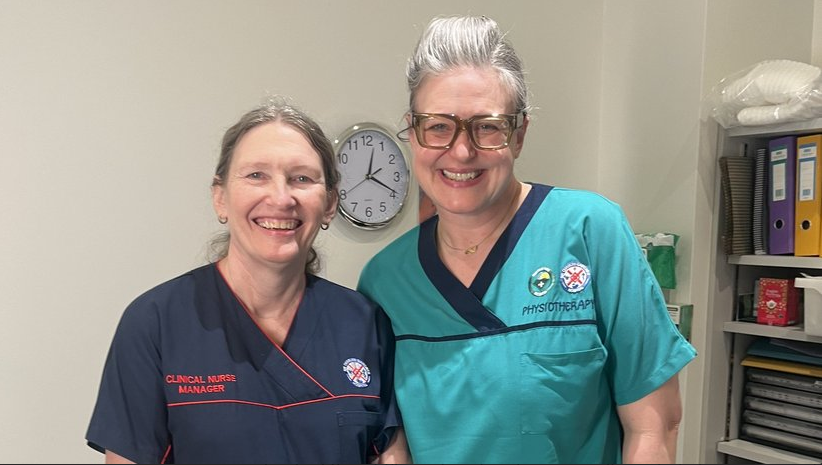
Lymph scanner helps improve symptoms of treatment for breast cancer

25/11/2026

A new device recently introduced at the Sir Charles Gairdner Hospital Breast Centre is helping clinicians with the early diagnosis of breast lymphoedema, which can be a debilitating consequence of breast cancer treatment.

A quality improvement project led by Breast Centre Senior Physiotherapist Christiane Purcell-Wells identified that a LymphScanner could be used as part of the standard Breast Physio lymphoedema surveillance, to help improve early diagnosis and treatment of breast changes after treatment.

Lymphoedema is a condition which involves swelling and accumulation of fluid due to a compromised lymphatic system.

"The non-invasive device detects and monitors changes in water content under the skin using tissue dielectric constant technology," she said.

"It generates a high frequency, low-power electromagnetic wave that penetrates the tissue being measured and then converts this value into percentage water content."

While surveillance for early diagnosis of lymphoedema in a patient’s arm is now well researched and established in standard practice, Christiane said breast lymphoedema was not.

“It’s much easier to treat early changes rather than established lymphoedema,” she said.

“We can help the patient reflect on their own self-management and be on the front foot in making sure we deal with the changes in the earliest stage.”

Christiane’s project recently received funding from the Charlies Foundation for Research Giving Day.

Previous Next
Last Updated: 25/11/2026
  • Facebook
  • Instagram
  • LinkedIn
  • YouTube

Footer menu

  • wa.gov.au
  • Copyright
  • Disclaimer
  • Privacy
  • Sitemap
  • Contact Us

Brought to you by the Department of Health, Western Australia

© Government of Western Australia 2018 to